Hi guys:
This week we will work on evidences of evolution
Print this worksheet to use it in class.
EVOLUTION EVIDENCES WORKSHEET
And watch the videos and summarize the in your notebooks to get extra points
See you at class!!!!
lunes, 30 de julio de 2018

lunes, 9 de julio de 2018
EVOLUTION THEORIES
Hi guys:
Here the previous reading where you are going to find information about evolution explanations, so I let you here again.
EVOLUTION READING
And finally, one link about Evolution theories, you will use to develop the exercise of this week.
http://www.yourarticlelibrary.com/biology/4-main-theories-of-evolution-explained-with-diagram-and-tables-biology/27220
See you at class!!!!
This first week after the vacation time, we will study Theories that explain the evolution of organisms.
We will use 1/2 sheet (pliego) of white card board, markers and your notes (taken from the readings below).
We will use 1/2 sheet (pliego) of white card board, markers and your notes (taken from the readings below).
This video is for you to open your mind!!!
Please watch it, we will discus some concepts which are descried here!!!
Please watch it, we will discus some concepts which are descried here!!!
Here the previous reading where you are going to find information about evolution explanations, so I let you here again.
EVOLUTION READING
And finally, one link about Evolution theories, you will use to develop the exercise of this week.
http://www.yourarticlelibrary.com/biology/4-main-theories-of-evolution-explained-with-diagram-and-tables-biology/27220
See you at class!!!!
martes, 12 de junio de 2018
VIRAL DISEASES
Hi guys:
Here you have a short description of viral diseases.

Read the following article about Origin of Life page 1 to 16, and take notes in your notebook.
http://nptel.ac.in/courses/122103039/pdf/mod2.pdf
Bring a 1/8 of white card board to design a Brochure about this topic.
Watch this video that will help to you, to understand more...
See you at class!!
Here you have a short description of viral diseases.
Read the following article about Origin of Life page 1 to 16, and take notes in your notebook.
http://nptel.ac.in/courses/122103039/pdf/mod2.pdf
Bring a 1/8 of white card board to design a Brochure about this topic.
Watch this video that will help to you, to understand more...
See you at class!!
martes, 22 de mayo de 2018
LAB ON MICROBIOLOGY
Hi students:
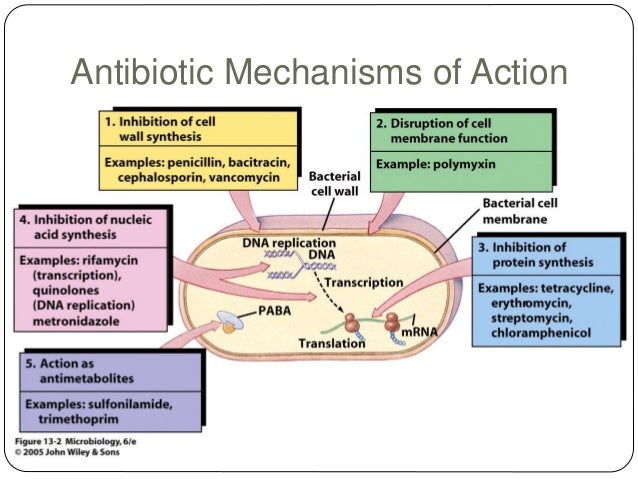
This week we will be working in a Virtual Lab related to the bacteria and substances that affect their growth.
In the following link you will find the new Lab Report Template. It will be presented as an article.
Read it and ask me questions if you don´t understand something...
LAB REPORT TEMPLATE
And here, the link, for the Vrtual Lab.
VIRTUAL LAB ON MICROBIOLOGY
Finally, in this link you will find information about antibiotics
ANTIBIOTICS DESCRIPTIONS
Bring an USB device to store the file started during the class, and complete it at home at home, if it´s necessary
See you at class!!!
This week we will be working in a Virtual Lab related to the bacteria and substances that affect their growth.
In the following link you will find the new Lab Report Template. It will be presented as an article.
Read it and ask me questions if you don´t understand something...
LAB REPORT TEMPLATE
And here, the link, for the Vrtual Lab.
VIRTUAL LAB ON MICROBIOLOGY
Finally, in this link you will find information about antibiotics
ANTIBIOTICS DESCRIPTIONS
Bring an USB device to store the file started during the class, and complete it at home at home, if it´s necessary
See you at class!!!
martes, 8 de mayo de 2018
WELCOME TO THE SECOND TERM - MICROBIOLOGY
Hi Students:
Welcome to the Second Term.
This week we will start with some general concepts related to Microbiology.
Print the worksheet in the school's copy office and bring it to the classroom.
Here it is the power Point Presentation I will use in class to explain the concepts.
POWER POINT PRESENTATION ON VIRUSES AND PROKARYOTES
Here a general description of this Science area.
See you at class!!!
Welcome to the Second Term.
This week we will start with some general concepts related to Microbiology.
Print the worksheet in the school's copy office and bring it to the classroom.
Here it is the power Point Presentation I will use in class to explain the concepts.
POWER POINT PRESENTATION ON VIRUSES AND PROKARYOTES
Here a general description of this Science area.
Microbiology (from Greek μῑκρος, mīkros, "small"; βίος, bios, "life"; and -λογία, -logia) is the study of microorganisms, those being unicellular(single cell), multicellular (cell colony), or acellular (lacking cells). Microbiology encompasses numerous sub-disciplines including virology, parasitology, mycology and bacteriology.
Eukaryotic microorganisms possess membrane-bound cell organelles and include fungi and protists, whereas prokaryotic organisms—all of which are microorganisms—are conventionally classified as lacking membrane-bound organelles and include eubacteria and archaebacteria. Microbiologists traditionally relied on culture, staining, and microscopy. However, less than 1% of the microorganisms present in common environments can be cultured in isolation using current means. Microbiologists often rely on molecular biology tools such as DNA sequence based identification.
Viruses have been variably classified as organisms, as they have been considered either as very simple microorganisms or very complex molecules. Prions, never considered as microorganisms, have been investigated by virologists, however, as the clinical effects traced to them were originally presumed due to chronic viral infections, and virologists took search—discovering "infectious proteins".
The existence of microorganisms was predicted many centuries before they were first observed, for example by the Jains in India and by Marcus Terentius Varro in ancient Rome. The first recorded microscope observation was of the fruiting bodies of moulds, by Robert Hooke in 1666, but the Jesuit priest Athanasius Kircher was likely the first to see microbes, which he mentioned observing in milk and putrid material in 1658. Antonie van Leeuwenhoek is considered a father of microbiology as he observed and experimented with microscopic organisms in 1676, using simple microscopes of his own design. Scientific microbiology developed in the 19th century through the work of Louis Pasteur and in medical microbiology Robert Koch.
Watch these videos and take notes in your notebook, to get extra points.
See you at class!!!
sábado, 14 de abril de 2018
IMMUNE SYSTEM
HI guys:
This week we will define and contrast different aspects of the Immune system.
I'll let you copies in the school of the worksheet. (Photocopies' office)
Here´s the image of the Immune system cell's you have to work with in the Dictionary.

Use the following link to open AND CHECK the class the power point presentation we are using at class!!!
PPT ON IMMUNE SYSTEM
And some videos you can use to understand better the Immune system functions
See you at class!!!!
This week we will define and contrast different aspects of the Immune system.
I'll let you copies in the school of the worksheet. (Photocopies' office)
Here´s the image of the Immune system cell's you have to work with in the Dictionary.
Use the following link to open AND CHECK the class the power point presentation we are using at class!!!
PPT ON IMMUNE SYSTEM
And some videos you can use to understand better the Immune system functions
See you at class!!!!
lunes, 2 de abril de 2018
GENETIC DISORDERS
Hi students:
This week yo will design an oral presentation about Genetic disorders. So please, read the following information and follow the class instructions to make it.
What are the types of genetic inheritance?
There are a number of different types of genetic inheritance including:
- Single gene inheritance
- Multifactorial inheritance
- Chromosome abnormalities
- Mitochondrial inheritance
Single gene genetic inheritance
Single gene inheritance, also called Mendelian or monogenetic inheritance. This type of inheritance is caused by changes or mutations that occur in the DNA sequence of a single gene. There are more than 6,000 known single-gene disorders, which occur in about 1 out of every 200 births. These disorders are known as monogenetic disorders (disorders of a single gene).
Some examples of monogenetic disorders include:
- cystic fibrosis,
- sickle cell anemia,
- Marfan syndrome,
- Huntington's disease, and
- hemochromatosis.
Single-gene disorders are inherited in recognizable patterns: autosomal dominant, autosomal recessive, and X-linked.
Multifactorial genetic inheritance
- Multifactorial inheritance, which is also called complex or polygenic inheritance. Multifactorial inheritance disorders are caused by a combination of environmental factors and mutations in multiple genes. For example, different genes that influence breast cancer susceptibility have been found on chromosomes 6, 11, 13, 14, 15, 17, and 22. Some common chronic diseases are multifactorial disorders.
Examples of multifactorial inheritance include:
- heart disease,
- high blood pressure,
- Alzheimer's disease,
- arthritis,
- diabetes,
- cancer, and
- obesity.
Multifactorial inheritance also is associated with heritable traits such as fingerprint patterns, height, eye color, and skin color.
Chromosome abnormalities
Chromosomes, distinct structures made up of DNA and protein, are located in the nucleus of each cell. Because chromosomes are the carriers of the genetic material, abnormalities in chromosome number or structure can result in disease. Abnormalities in chromosomes typically occur due to a problem with cell division.
For example, Down syndrome (sometimes referred to as "Down's syndrome") or trisomy 21 is a common disorder that occurs when a person has three copies of chromosome 21. There are many other chromosome abnormalities including:
- Turner syndrome (45,X0),
- Klinefelter syndrome (47, XXY), and
- Cri du chat syndrome, or the "cry of the cat" syndrome (46, XX or XY, 5p-).
Diseases may also occur because of chromosomal translocation in which portions of two chromosomes are exchanged.
Most common disorders
- P – Point mutation, or any insertion/deletion entirely inside one gene
- D – Deletion of a gene or genes
- C – Whole chromosome extra, missing, or both (see Chromosome abnormality)
- T – Trinucleotide repeat disorders: gene is extended in length
| Disorder | Chromosome | Mutation |
|---|---|---|
| 22q11.2 deletion syndrome | 22q | D |
| Angelman syndrome | 15 | DCP |
| Canavan disease | 17p | |
| Charcot–Marie–Tooth disease | ||
| Color blindness | X | P |
| Cri du chat | 5 | D |
| Cystic fibrosis | 7q | P |
| Down syndrome | 21 | C |
| Duchenne muscular dystrophy | Xp | D |
| Familial Hypercholesterolemia | P | |
| Haemochromatosis | 6 | P |
| Haemophilia | X | P |
| Klinefelter syndrome | X | C |
| Neurofibromatosis | 17q/22q/? | |
| Phenylketonuria | 12q | P |
| Polycystic kidney disease | 16 (PKD1) or 4 (PKD2) | P |
| Prader–Willi syndrome | 15 | DCP |
| Sickle-cell disease | 11p | P |
| Spinal muscular atrophy | 5q | DP |
| Tay–Sachs disease | 15 | P |
| Turner syndrome | X | C |
See you at class!!!
Suscribirse a:
Entradas (Atom)